
Diving into freshwater species, our Marine Science program has recently had a clutch of over 500 baby axolotls born right here at Riverview High School! Students and staff alike are enjoying learning more about the interesting world of axolotls (and seeing their cute little faces!)
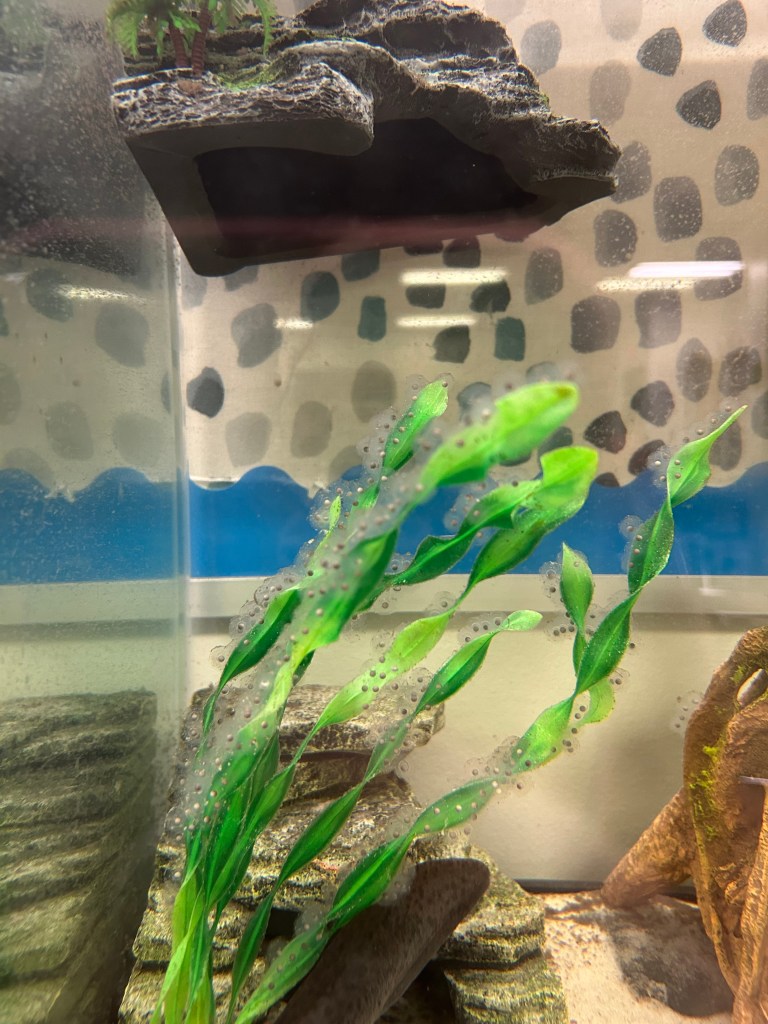
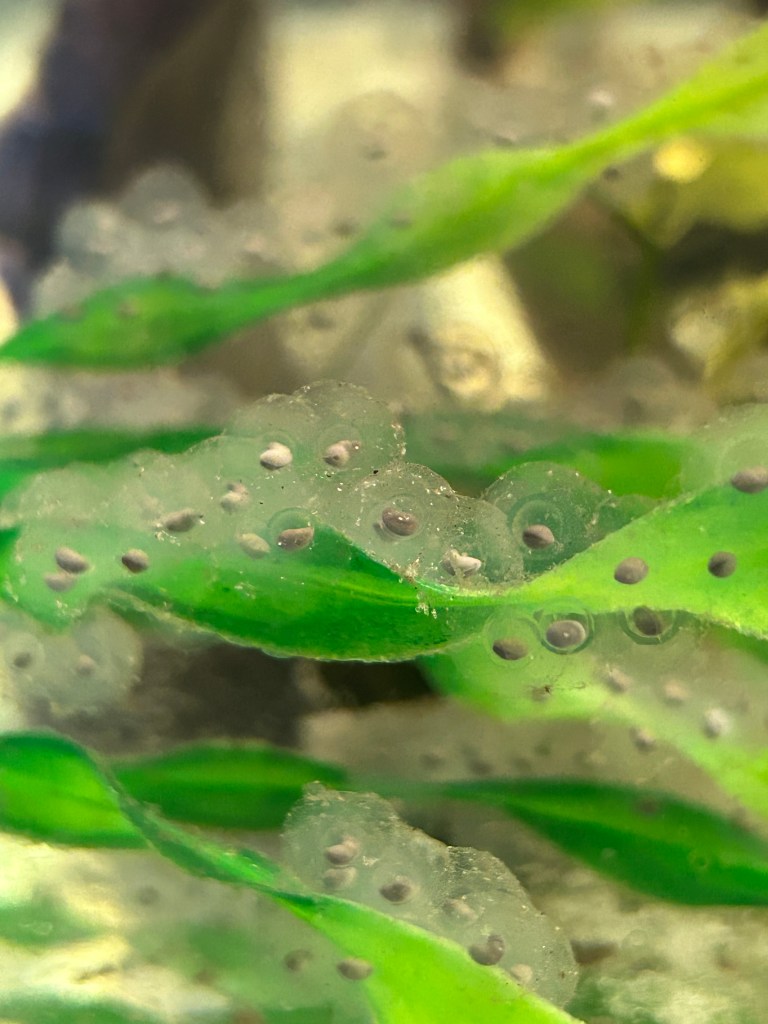
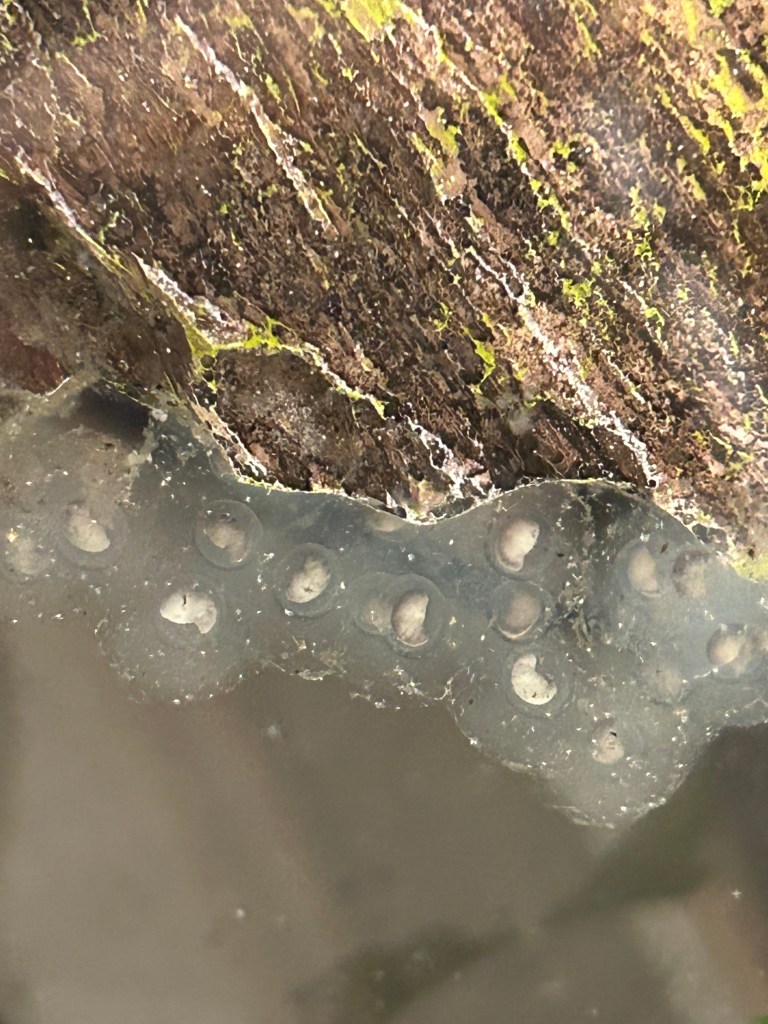
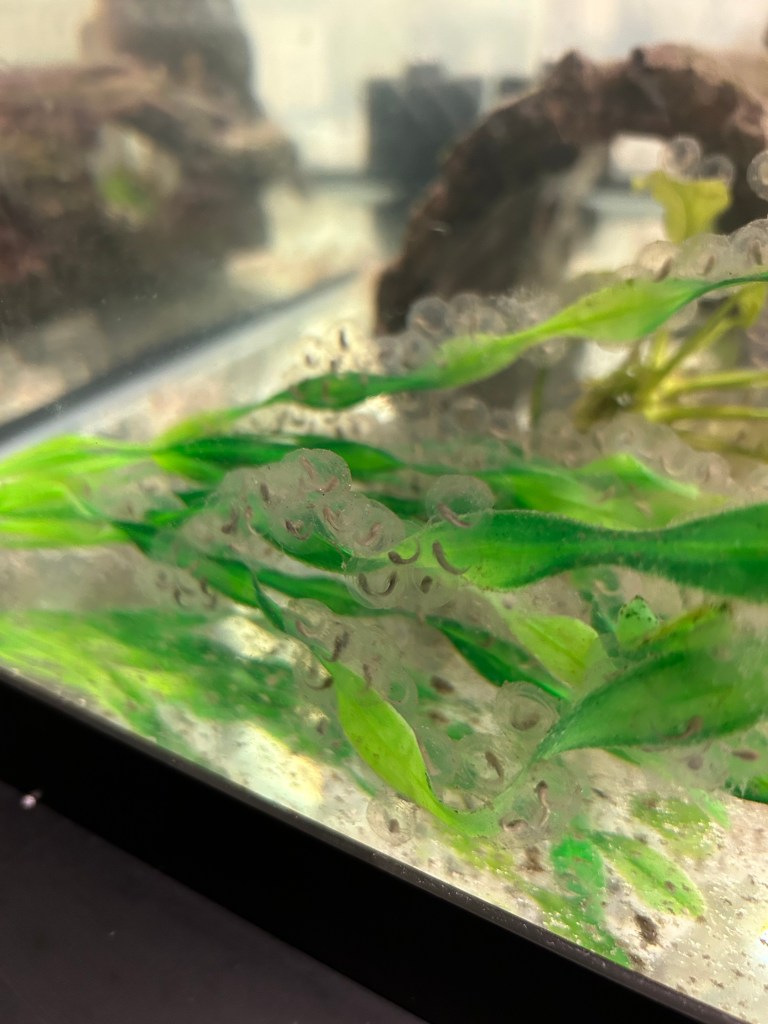
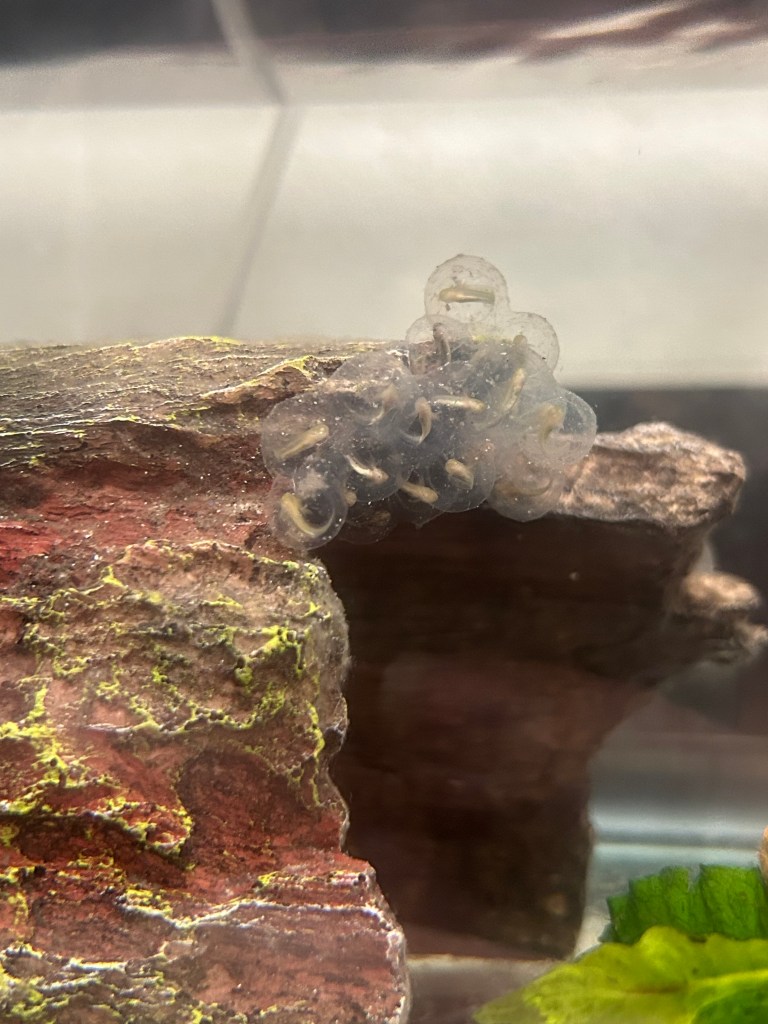

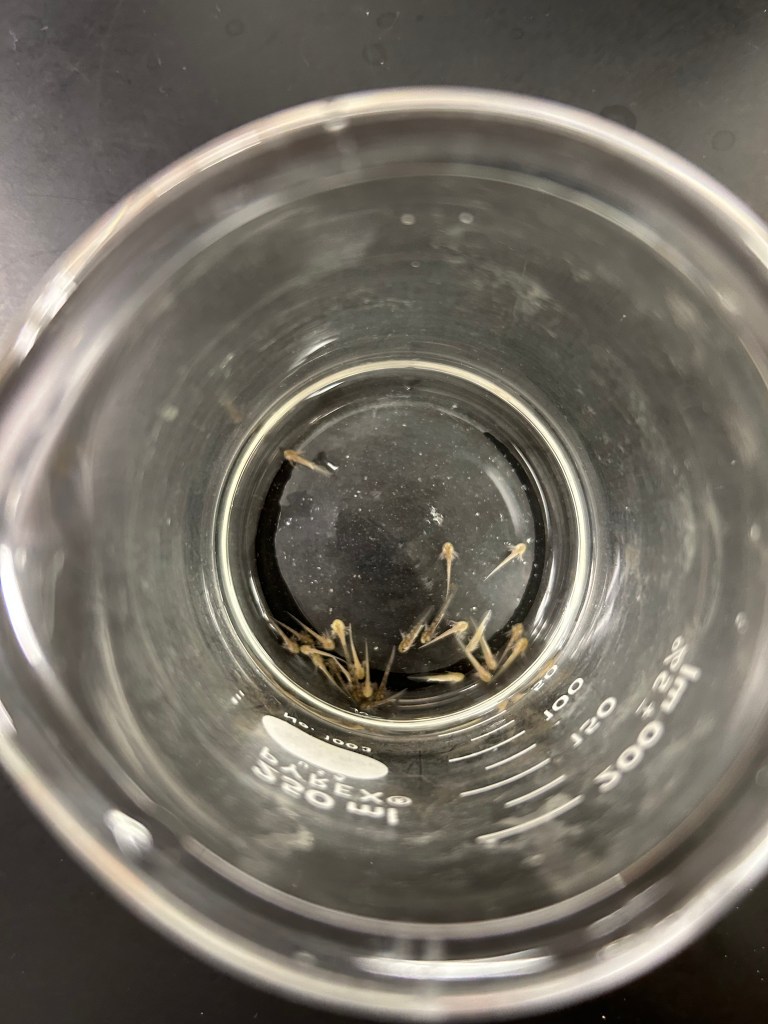
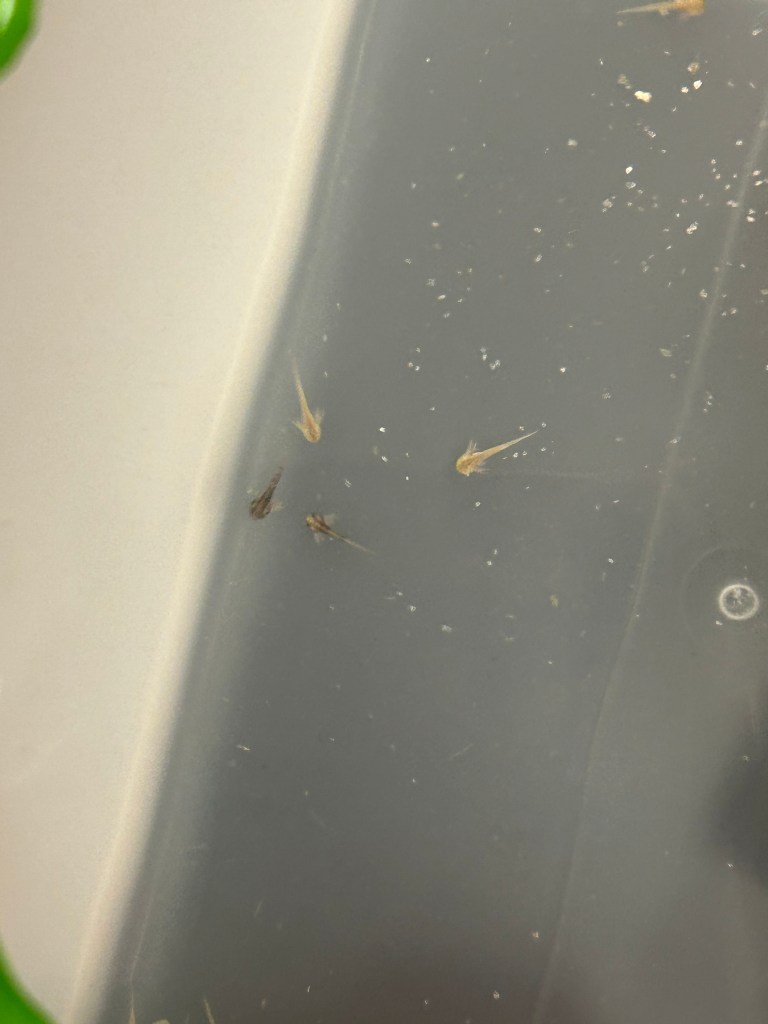
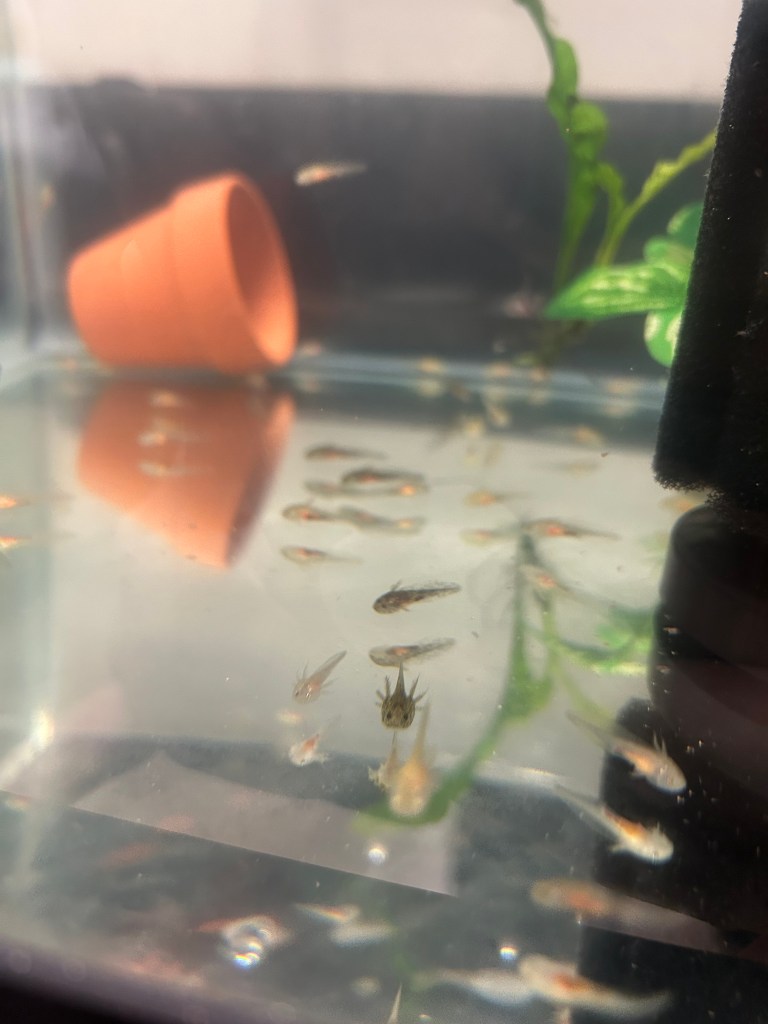
In the marine science program, students are getting to study axolotls including the unique world of amphibians and their specific characteristics, genetic morphology and a look into the application of genetic engineering in the classroom.
Students have the opportunity to learn first hand and visualize the stages of embryonic growth from an egg to the birth, and learn how to care for these aquatic, unique organisms from birth to adulthood. Such an amazing opportunity that has the students wanting to learn a “lotl” more!
Check out this cute video of the baby axolotls eating their favorite tiny meal, Artemia, also known as Brine Shrimp. As the eat the shrimp, you will see them jump for joy!
What are Axolotls?
- The Axolotl, also known as Ambystoma mexicanum, is a cold-blooded amphibian, closely related to the salamander. Contrary to many people’s beliefs, it is not a fish, not a frog, and not entirely a salamander – it’s something in between!
- Unlike salamanders which will eventually morph, meaning they lose their gills and venture onto land, axolotls remain fully aquatic their entire lives and should never be handled or removed from the water. Technically axolotls are stuck in their larval stage, meaning they never morph like traditional salamanders, but they are still able to breed and retain their amazing juvenile properties like regrowing parts of their body!
- The most distinguishable part of the axolotl is the amazing “crown” that seems to surround their heads. This is actually their gills and important for them to breathe underwater- these gills take on many shapes and colors, so it is always a fun surprise to see what your axolotl may look like full grown!
- Axolotls live for about 5-15 years, depending on how well they are taken care of, and this is no small commitment, but a journey together.
- Axolotls can grow between 6-12 inches long, with the average about 8 inches for an adult.
- Axolotls have an incredible personality and can be seen swimming around tanks, or chilling at the bottom. They aren’t fond of lights and are usually found hiding in caves. They spend most of their life holding still and waiting for food to come along, but they have been known to recognize their owners and play around bubbles produced from air stones. They prefer cooler water temperatures between 60-68F.
- Axolotls are carnivores, meaning their diet consists of only meat. Their favorite food is worms!
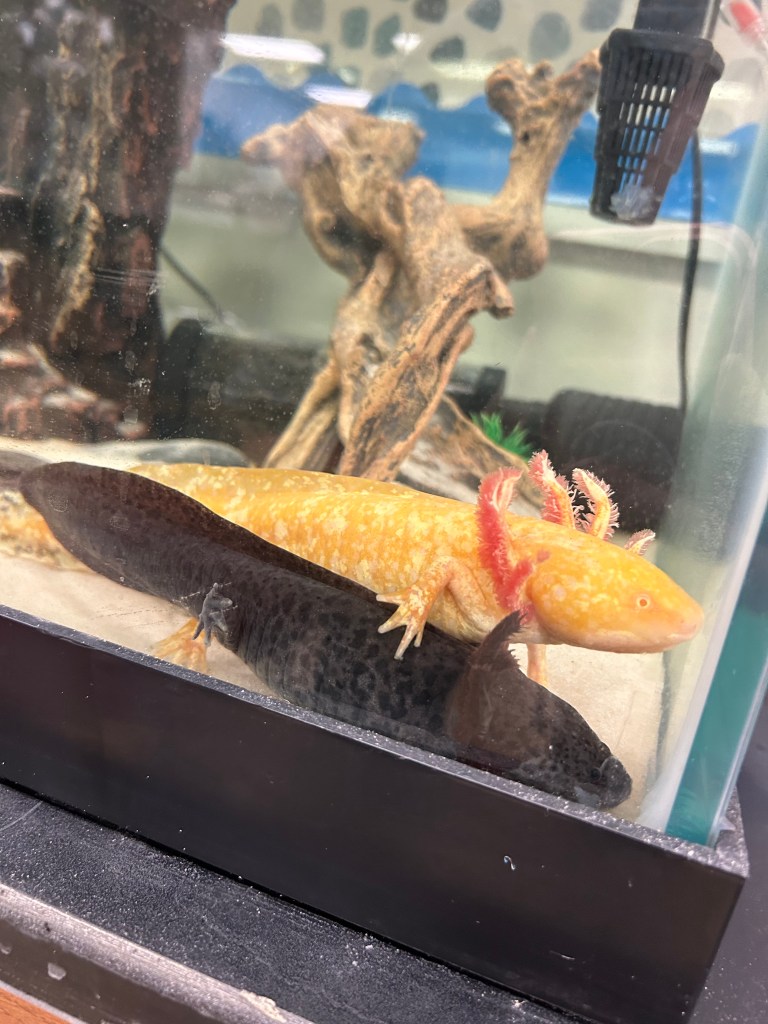
Axolotls Morphologies (Colors)- How does that happen?
- The color variation of many aquatic animals, including axolotls, is due to the pigment cells called chromatophores. Three various types of chromatophores determine the color of your axolotl
- Melanophores – having Eumelanin that causes a black or brown pigmentation
- Xanthophores – having Carotenoids and Pteridines that cause a yellow and red pigmentation
- Iridophores – having Crystalized Purines that cause a shiny soap-bubble type of pigmentation (Iridescence)
- These three types of pigment cells possess 14 pairs of chromosomes, each coming from a male and female.
- The different axolotl morphs are a result of genius genetics and thanks to genetic engineering, we can now pet some amazing axolotl morphs in our home aquariums
- For example, the GFP morph is due to genetic engineering – the Green Fluorescent Protein found in jellyfish was placed it into the axolotl genome which can make them glow neon green under blacklight!
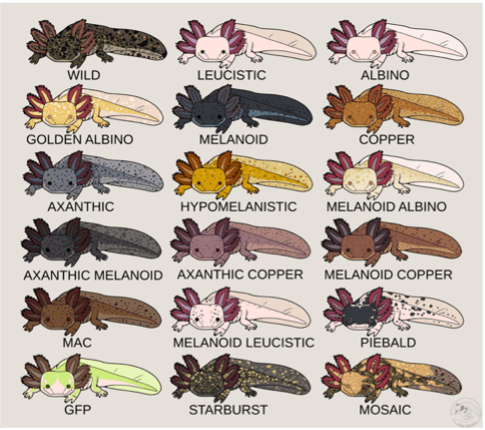
Some cool morphs include:
- Leucistic “Lucy”
- Golden Albinos
- Wild Type
- Pie-Bald
- Mosaic
- Copper
- Lavender or Silver Dalmatian
- Melanoid
- White Albino
- Speckled Leucistic (Dirty Lucy)
- Chimera
- GFP
- Firefly
- Enigma or Starburst
- Axanthic
Axolotl History and Conservation
- Axolotls are found naturally in several lakes underlying what is now Mexico City, specifically Lake Xochimilco and Lake Chalco. These lakes were drained by Spanish settlers after the conquest of the Aztec Empire and this destroyed a lot of the axolotl’s natural habitat.
- Axolotls were actually named after Xolotl, the Aztec god of fire and lightning, who could take on the form of a salamander!
- Unfortunately, as of 2020 wild axolotls were listed as critically endangered and near extinction due to urbanization, water pollution, and introduction of invasive species that preyed on axolotls. Axolotls were also harvested in the wild to be used for scientific research due to their regenerative properties. There are less than 1,000 axolotls left in the wild and are decreasing rapidly.
- The good news is that their populations have rebounded in captivity and conservation efforts have helped bring this species from the brink of extinction. By purchasing axolotls as pets and spreading your knowledge about them, you are supporting breeders who are keeping the species in existence!
*DISCLAIMER: You CANNOT release captive-bred axolotls into the wild!*
- Axolotls will become an invasive species if introduced to any ecosystem outside of where they would be normally found. By releasing captive-bred animals, you may think you are “saving” their populations, but instead you would be hurting them and others.
- Also, because their genes have been manipulated, they are very different from the actual wild-type axolotls found in Mexico. Due to their altered genetic makeup, you CANNOT release ANY captive-bred axolotls into the wild!
- Keep this in mind as due to the nature of possible release, axolotls are banned in several states in the US for fear of introduction into non-native habitats.
- As a result of this, axolotls are illegal to own in California, Maine, New Jersey, and D.C., while a permit is required in New Mexico and Hawaii.
- In Canada, it is illegal to own axolotls in New Brunswick, British Columbia, Prince Edward Island, while a permit is required in Nova Scotia.
 Ram Nation Aquascience